
Lowpad Control
Orchestrating automated intralogistics flows
Get an insight into
Lowpad Control.
Lowpad Control.
The software layer that coordinates and controls Lowpad’s automated intralogistics processes.
Efficient Flow Orchestration
Centralised intelligence for warehouse automation
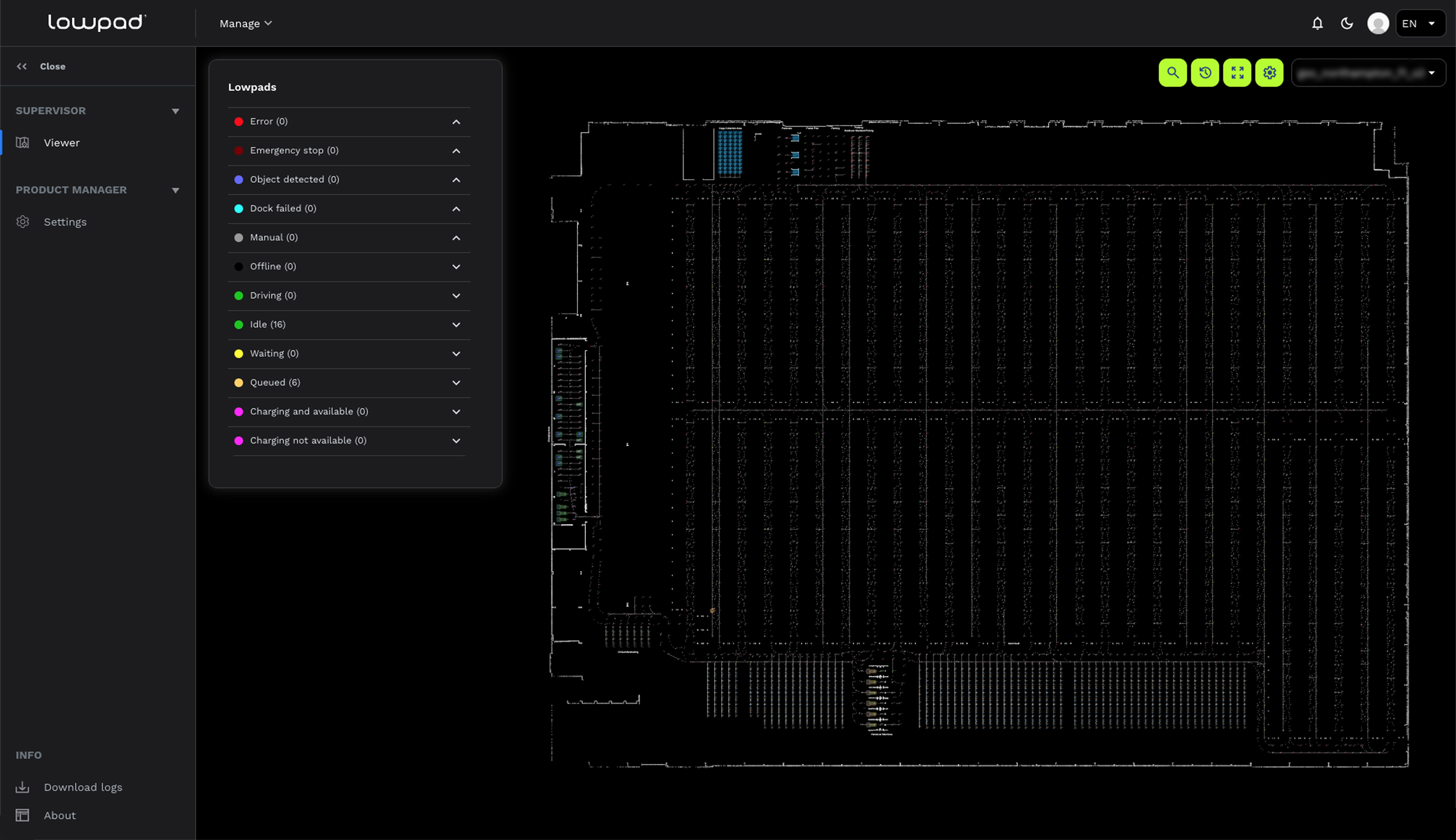
Lowpad Control is the software layer that coordinates and controls Lowpad’s automated intralogistics processes. Acting as a digital traffic controller, it continuously dispatches tasks to a fleet of AMRs and calculates the most efficient routes in real time keeping automated flows stable, predictable and productive.
By putting software in charge of every transport decision, Lowpad Control manages the complexity of coordinating robots, load carriers and workflows effectively in dynamic retail warehouse environments. It responds automatically to changing priorities, volumes and conditions, ensuring that automated processes continue to run smoothly throughout the day.
When software takes intelligent control
Operational visibility and user control
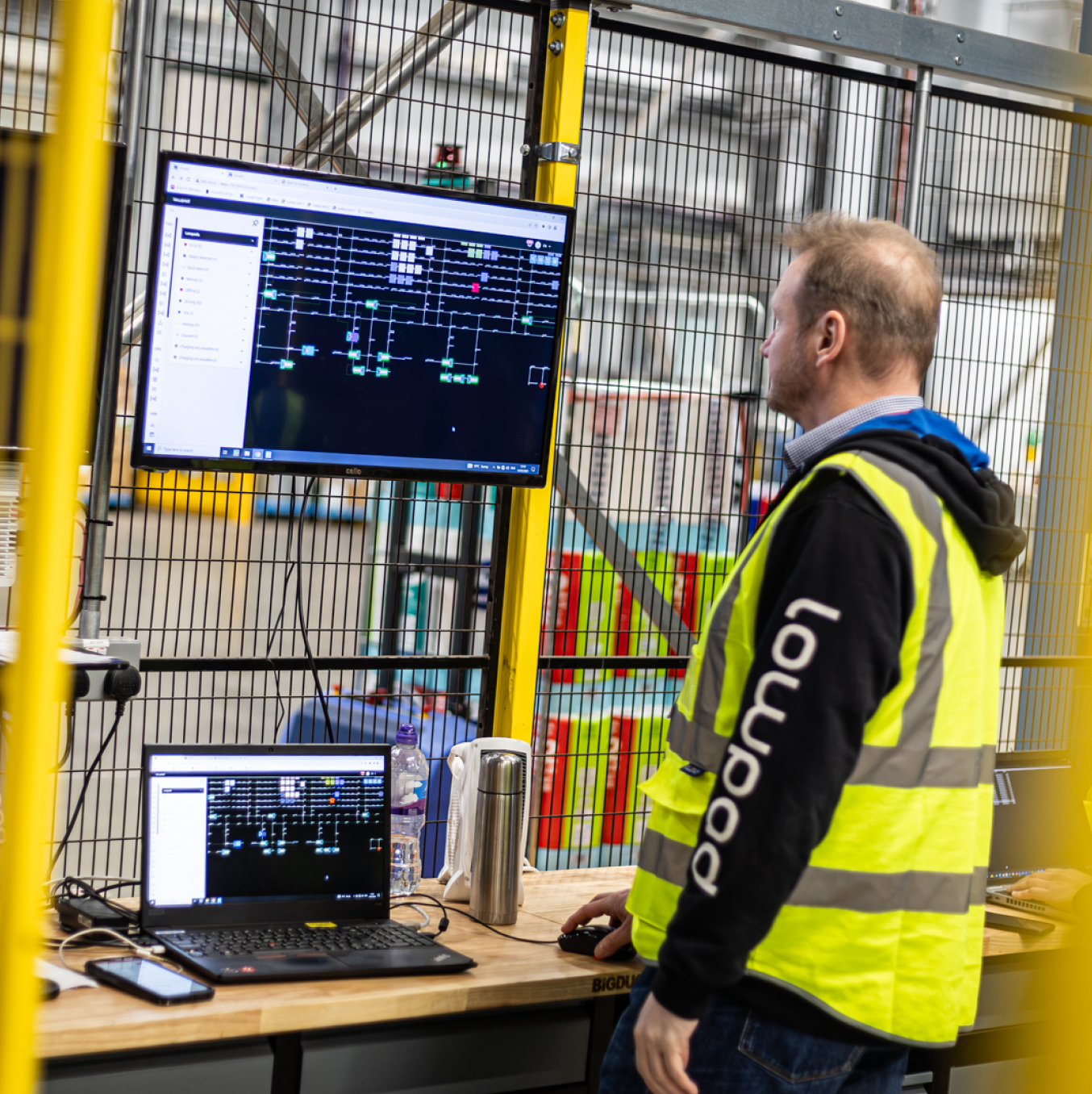
Through a clear and intuitive user interface, operators maintain direct control over the processes Lowpad automates. The interface provides operational visibility into active workflows, task execution, and AMR status, allowing teams to monitor operations, intervene when needed, and keep automated processes aligned with daily priorities.
Deployable in any environment
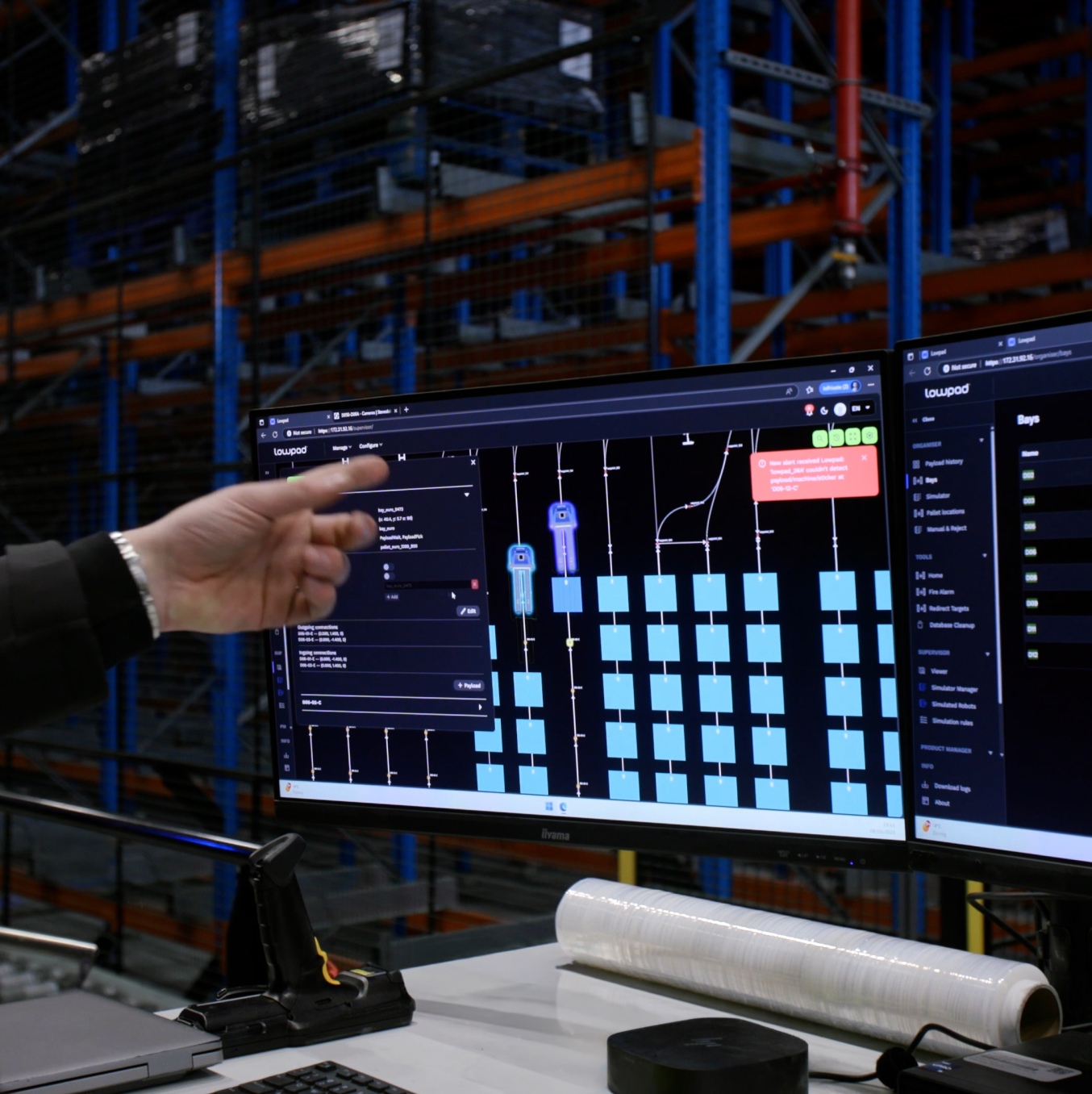
Within Lowpad Control is the World Editor, a powerful configuration tool that enables the creation of a precise digital representation of the warehouse environment (Digital Twin). Paths can be configured, loading and unloading stations positioned, handover locations and charging points defined, and fixed elements incorporated into the operational map. This digital foundation supports accurate routing, sequencing and task execution, forming the basis for reliable automation.
Powerful and scalable fleet manager software
Combined with real-time fleet management, Lowpad Control ensures the coordinated movement of AMRs within a single, controlled system. It provides the operational control required to run automated inbound, outbound, and point-to-point transport, and case-picking processes with confidence, while remaining flexible as layouts and processes evolve.
Lowpad Control
The benefits
01
Real-time fleet orchestration
Lowpad Control keeps automated processes stable and predictable. It constantly assigns tasks and calculates optimal routes for the entire AMR fleet in real time. With Lowpad Control, your operations will remain efficient even as priorities, volumes, and conditions change throughout the day.
02
Intuitive operational oversight
The straightforward user interface gives operators direct insight into active workflows, task execution and AMR status. With this, it is easy to oversee operations, intervene when necessary and keep your automation aligned with daily tasks.
03
Deployable in any environment
The World Editor lets you create a digital twin of your warehouse and set up paths, stations, handover points, and charging locations. This way, Lowpad Control is easy to set up for any layout and scale as your operations grow.
transition today